


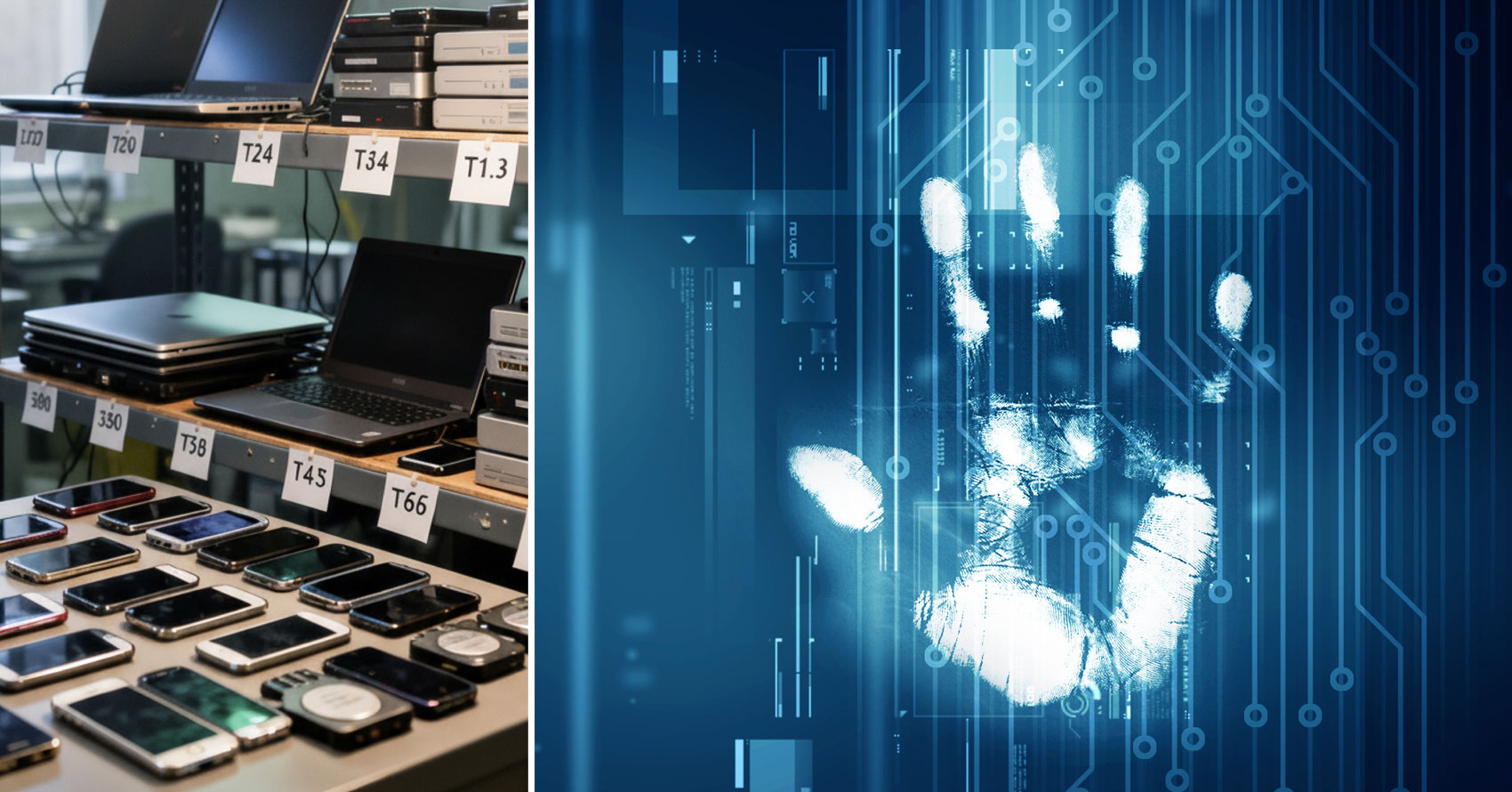
The UK is already facing severe delays in criminal cases due to a shortage of digital forensics expertise. According to recent reporting by Computer Weekly, the situation highlights why Norway must act now to avoid a similar backlog.
In the UK, detectives have more than a thousand mobile phones waiting in evidence rooms, some untouched for over a year. Computer Weekly recently reported that over 1,300 devices in one police force are still awaiting analysis. Not because technology is lacking, but because there are simply not enough trained digital investigators.
Read the full article on Computer Weekly.
The consequences are serious: victims waiting for justice, investigators overwhelmed by data, and courts without answers.
Now imagine Norway five years from today. Every criminal case, every cyber incident, and every online fraud will depend on digital evidence, but who will analyse it?
A Warning, and an Opportunity for Norway
Norway has not yet reached the extreme delays seen in the UK, but the warning signs are clear. Each year, more Norwegian investigations involve digital evidence, from smartphones and laptops to cloud services and IoT devices. Without a steady pipeline of trained specialists, Norway could face the same backlog.
– Digital evidence is now central to almost every investigation, says Emlyn Butterfield, Rector at Noroff University College.
– Without trained forensic analysts and incident responders, critical evidence risks being delayed, mishandled, or lost. Our goal is to ensure Norway never reaches that point.
This need is reflected in recent government direction. The Ministry of Justice has called for strengthened competence within the Norwegian Police Service. In response, the Norwegian Police University College (PHS) has launched a one-year programme in Investigation to strengthen foundational investigative skills and prepare law enforcement for increasingly digital cases.
While PHS reinforces traditional investigative methods, Noroff University College’s bachelor’s degree in Digital Forensics and Incident Response focuses on the digital dimension, training specialists who can secure, analyse, and interpret the digital traces found in nearly every investigation.
– Digital traces are now part of almost every criminal case, says Odin Heitmann, National Administrator for Computer Technical and Internet-related Investigations at Kripos/NC3.
– Digital forensics is essential for securing evidence, reconstructing events, and ensuring reliable and verifiable results. You don’t need to be a police officer to contribute, civilian expertise and specialised education are vital in the fight against digital crime.
The Experts Behind the Evidence
Digital Forensics and Incident Response (DFIR) specialists are the professionals who uncover, preserve, and reconstruct digital events. They examine devices, trace intrusion paths, recover data, and prepare evidence that stands up in court.
Demand for these specialists far exceeds supply, not only in policing, but across consultancy, cybersecurity, and private industry.
Building Capacity Through Education
Noroff University College’s bachelor’s degree in Digital Forensics and Incident Response directly addresses this growing need. Students learn to:
- recover and analyse digital evidence using industry-standard tools
- respond to live cyber incidents and ongoing attacks
- contain breaches, identify intrusion paths, and restore systems
- understand legal and ethical requirements for presenting evidence in court
– The UK’s situation shows what happens when digital expertise fails to keep up with technological development, says Veronica Schmitt, Study Programme Leader.
– By educating Norway’s next generation of digital investigators, we help prevent similar backlogs from occurring here.
Students can study online, hybrid, or on campus in Kristiansand. The programme is NOKUT-accredited and approved by the Norwegian State Educational Loan Fund (Lånekassen).
Graduates move into roles such as digital forensic analysts, cyber incident responders, and investigators in both law enforcement and private industry.
Be Part of Norway’s Digital Investigation Future
Help close the digital forensics skills gap and ensure Norway stays ahead of the crisis other countries are already facing.
Explore the DFIR bachelor programme, book a study guidance session, or contact our admissions team to find out how you can become part of Norway’s next generation of digital investigators.
Digital evidence is already shaping the outcome of tomorrow’s cases. The challenge now is whether society will have enough trained professionals to uncover and interpret it correctly.